legacy home


     TDA1541A non-oversampling DAC Revision 1.1b, July - Sept 2004, Gallery

     Some DACs made with this board


Gary Bronner from New York, USA, was among the first to report a working unit. MDF board, copper sheets, Caddock I/V resistors, and CS8414 in the SO => DIP converter.


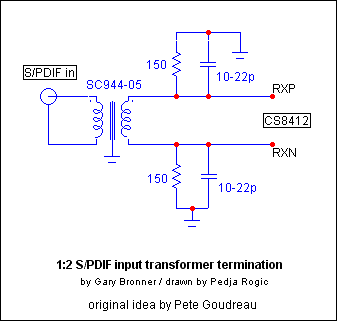
Gary has pointed out an S/PDIF transformer differential termination. Some say CS841x likes it, and according to what I've heard, I can confirm that it works. Gary's recommended circuit also includes the transformer's primary side capacitively coupled to the ground, so its absence is my intervention; I did found it sounding better when it is left floating, assuming the S/PDIF line's ground is coupled at a transmitter's side, as it usually is. If it, however, is not, that coupling is advisable to prevent EMI.


Some more ideas on the topic of transformer-coupled S/PDIF receiving interface offered by Jocko Homo can be found here.

Gary has also pointed out the extreme importance of polarity of the mains transformer used for a reclocker. (Since in this DAC I use one transformer for all the DAC circuits, I have tried swapping polarity of the transformer's secondary feeding the reclocker and found it to be of higher importance than any transformer polarity I have ever experienced.)


Jason Strohmeier, Urbana, Illinois, USA, has made an extremely cute CD player using a Philips CD-Pro transport, which feeds the DAC directly via I2S. He posted here more info about this project. Final impressions are here.


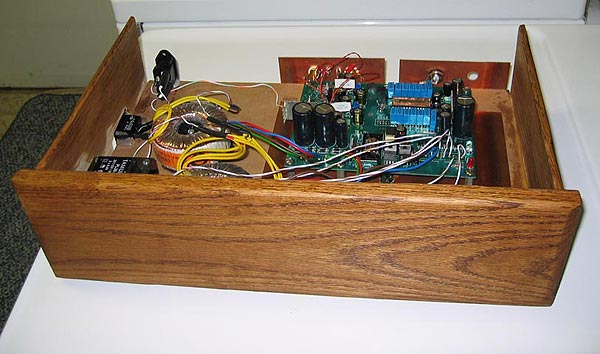
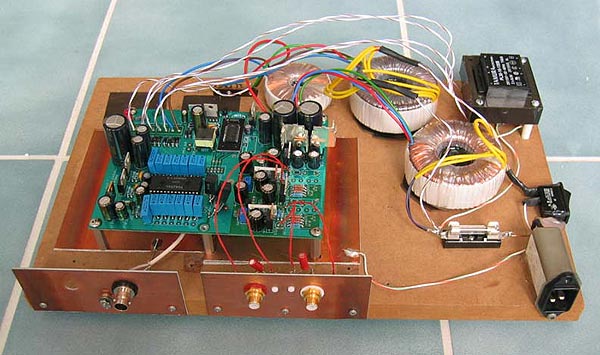
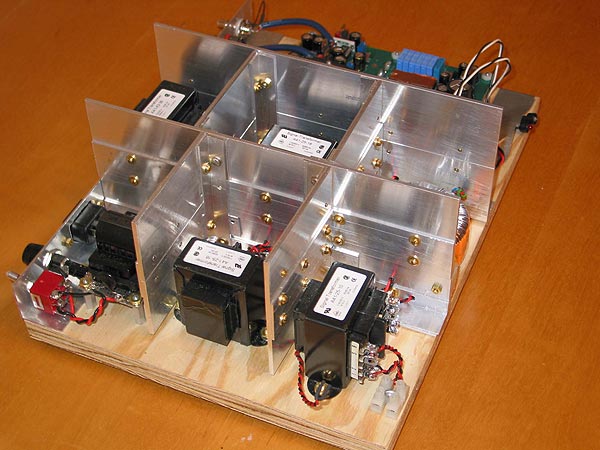
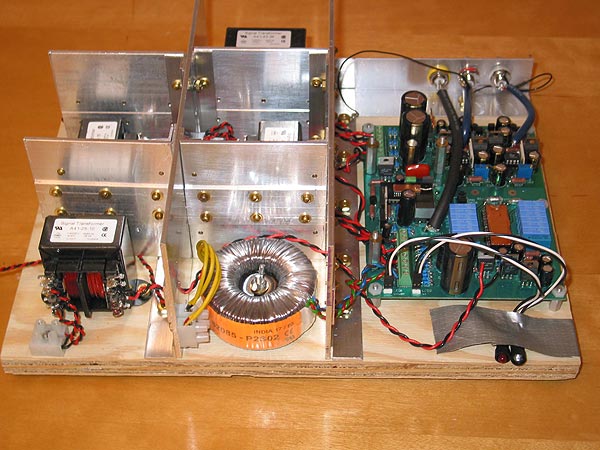
The device below has been made by Roy Pafenberg, USA. One of the units that started to sing without a case but otherwise done very ambitiously. It has one of the most impressive transformer setups I have ever seen in DACs, the whole six independent units, each having its own box.


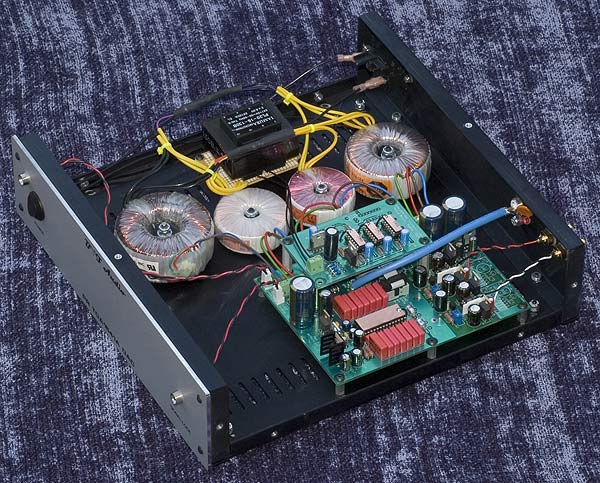
Leo Kirkbride, Mansfield, UK, who was already familiar with the concept by modifying his own Arcam Alpha 5+ (which employs TDA1541A) putting it into the non-o/s mode and applying the AD844 non-f/b stage reported also finished DAC based on this PCB.

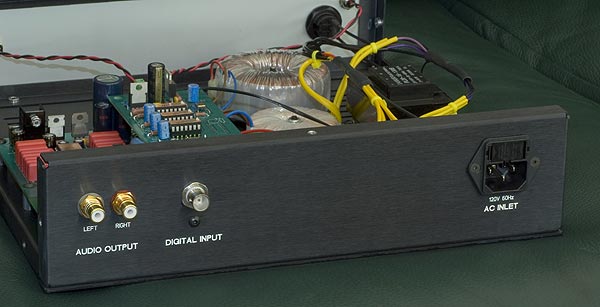
He submitted the pics of the DAC in the working phase (new pics of the DAC in the case should follow soon). At right it is the Antrim custom-made transformer ordered in the group buy organized once by Jon Clancy at diyA. Contrary to the conventional audiophile wisdom, Ron has found that the Panasonic FC capacitors were sonically inferior to standard electrolytic caps when used like reservoir pre-regulator units. Ron also has found the bypass cap in the TDA1541A's -15V supply had extreme importance and settled on 0.1uf Multicap RTX. As the pic shows, he also uses Caddock TFO20 for I/V. Ron preferred these to Vishay, Holco, Riken, and Caddock MK132.


Bryan Failing's (San Jose, California, USA) device below. Extremely seriously done whole unit, including the chassis.


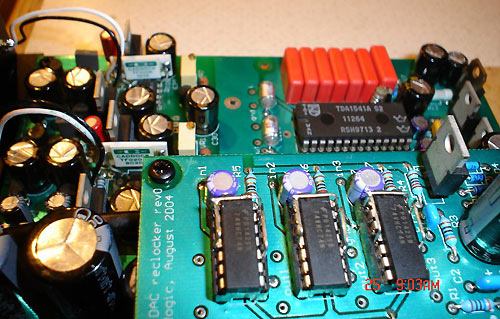
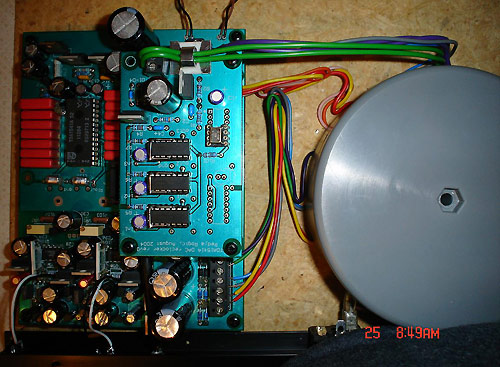
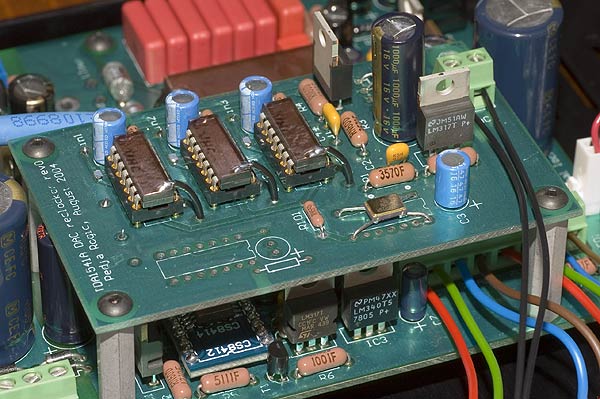
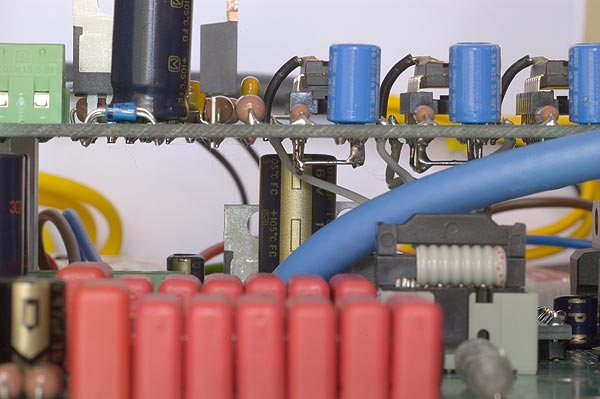
Reclocker board.


Are you sure there is no life here?


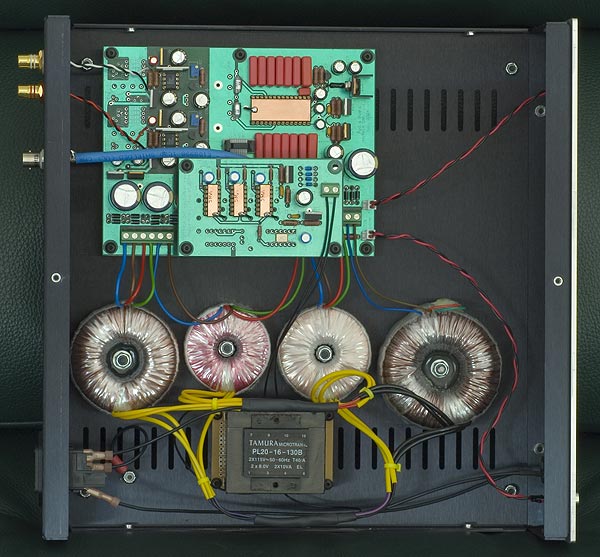
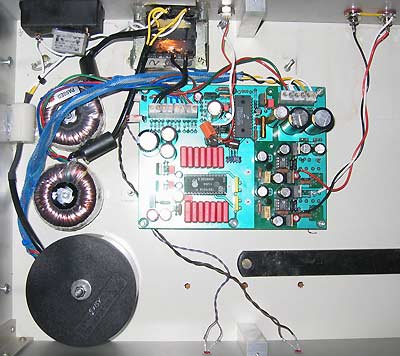
The whole unit, from above.


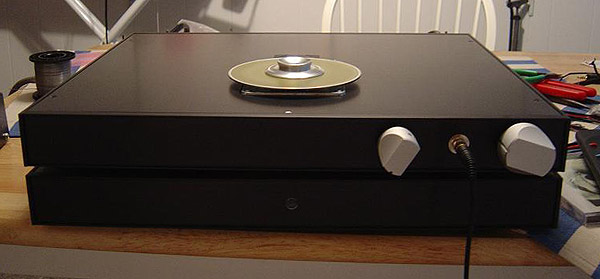
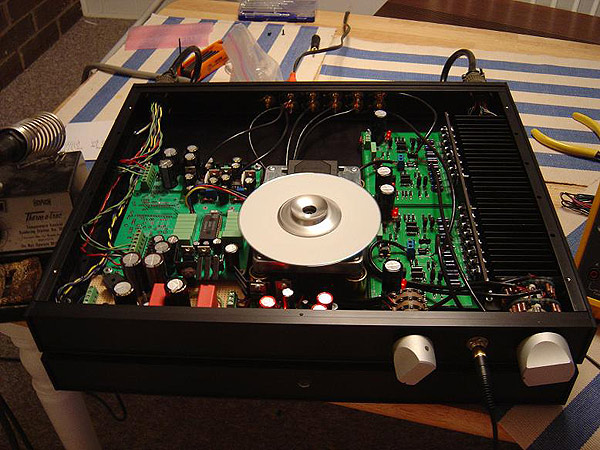
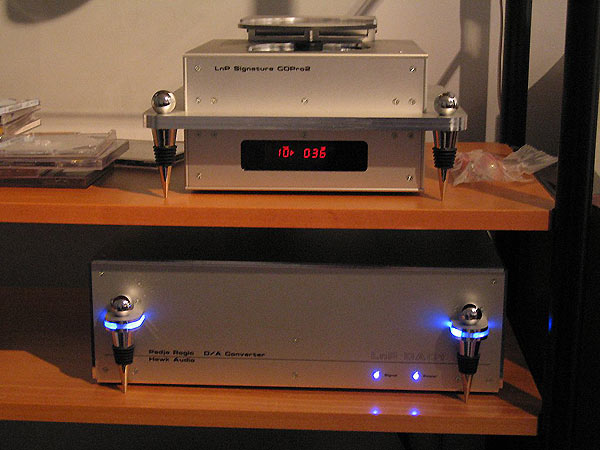
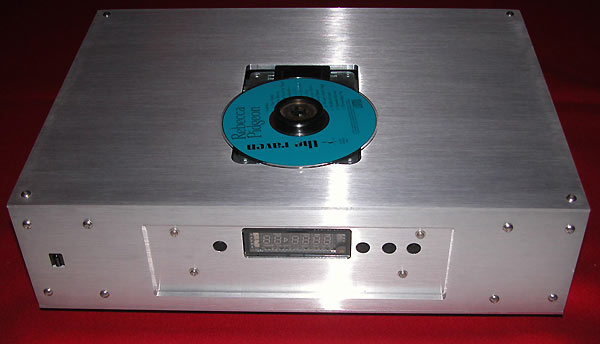
Any objections to the aesthetics of the DIY stuff? The author is Tony Moore from Chester, United Kingdom. Philips CD-PRO2 based transport above.


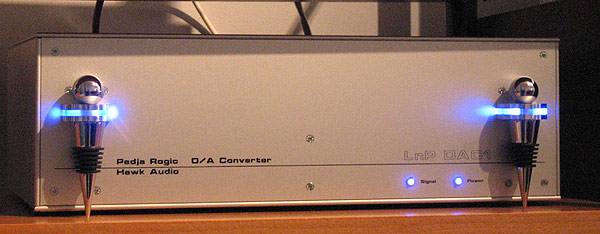
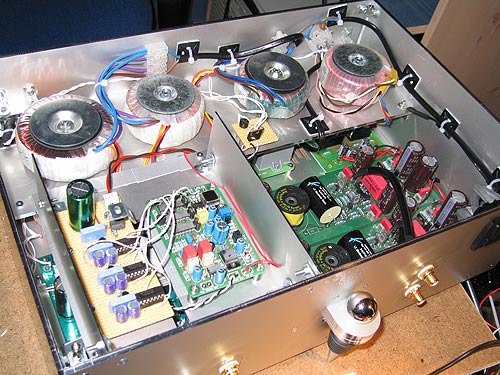
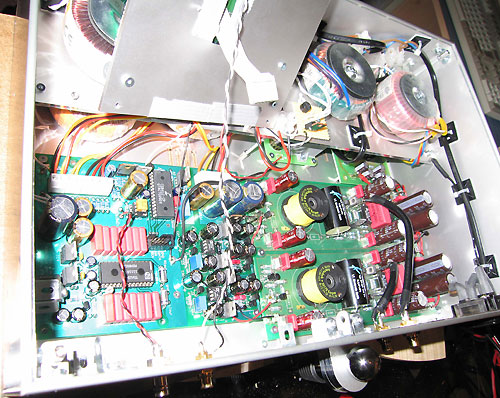
As the front plate acknowledgements point out, the interior is an interesting combination of the DAC described here and Hawk MP DAC's output buffer. Reclocking is here PLL-based and is accomplished by use of the Tent XO-DAC module driving dual D flip-flops per each I2S line.


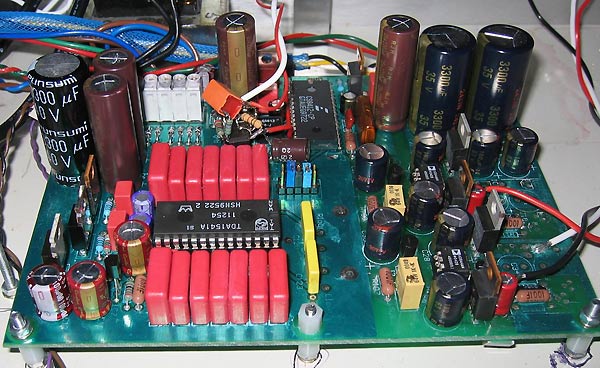
Yes, the DAC board is below.


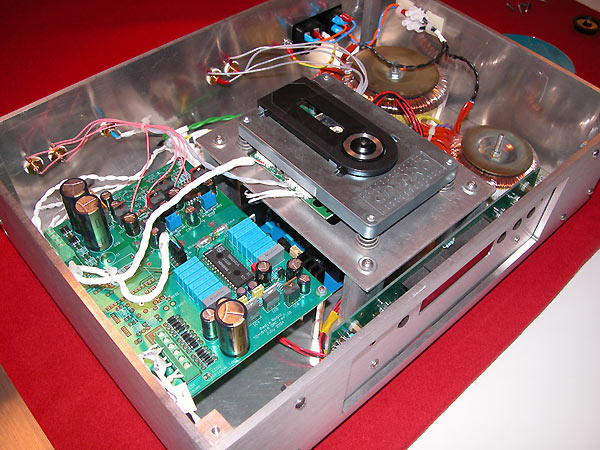
Carlo Giunchi from Rome, Italy has also made something impressive. His unit is the single-box CD player using also CD-PRO interfaced to this DAC directly via I2S.


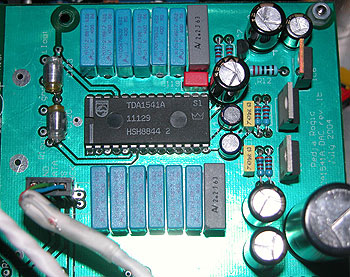
The DAC part close up.


The DAC below is made by Arne Karlsen from Hundvag, Norway. Apparently, some experimenting/tweaking took the place. The result is one interesting S/PDIF input stage, employing firstly the buffer cutting the route from the CS8412's input stage's Schmitt trigger back to the S/PDIF line (yes, Jocko is the culprit...), and then a transformer to provide a differential signal. More info can be found here and here.


Transformer setup right by the most ambitious.